Food Waste Reduction App in Chicago, IL
Reduce food waste in Chicago, IL with AI-powered food tracking. Expiry alerts, recipe generation, and household sharing help you save $1,300/year.

Where Chicago, IL's food waste actually happens
Every Chicago, IL kitchen is different, but the failure modes are the same. Here's how each one plays out locally — and what the app does about it.
🛒 The overbuy
Big trips to Jewel-Osco and Mariano's feel efficient — until the fresh stuff spoils before the week ends. The pre-shop inventory check shows what you already have before you buy more of it.
🕰️ The expiry blind spot
Illinois generates about 19 million tons of food waste annually. Chicago's climate means households stock up before winter storms, leading to unique inventory management challenges. Most of that is food that was perfectly good — just forgotten. Expiry alerts at 7, 3, and 1 days close the gap.
🔄 The duplicate buy
Third bottles of soy sauce. Second bags of flour. When you can't see your inventory, you re-buy it — and the older copy expires in the back. One live inventory ends the cycle.
🍲 The lonely ingredient
Half a bunch of cilantro. Two stalks of celery. Individually they look useless; together they're dinner. The recipe engine builds meals from exactly what's left.
What food waste costs Chicago, IL
Applying the national per-household average to 1.0 million households gives a rough citywide picture — and it's enormous.
Chicago, IL's moderate grocery costs soften the blow — but the national per-household average still applies. Cutting even a quarter of that waste — with expiry alerts and pantry-first meal planning — puts real money back in Chicago, IL pockets.
Built for Chicago, IL — from Jewel-Osco runs to farmers market hauls
Chicago, IL has one of the most exciting food scenes in the United States — from 50+ seasonal markets including the historic Maxwell Street Market to Deep-dish pizza, Chicago hot dogs, Italian beef, steakhouse culture, Polish and Mexican influences, craft beer scene. ScanMyPantry helps you make the most of every ingredient.
- Smart consumption nudges — the app suggests recipes using items that expire soonest, reducing waste before it happens
- Waste analytics dashboard — track your improvement over time: food saved, dollars saved, and habits changed
- Household waste reduction — sync with up to 5 family members so everyone knows what needs eating and what to stop buying
- Grocery discipline tools — pre-shop inventory check prevents buying duplicates of things you already have
- Environmental impact — less wasted food means a smaller carbon footprint for your household
Where Chicago, IL shops — and where the overbuying happens
Between the big chains and the markets below, the average Chicago, IL kitchen gets restocked two or three times a week. Keeping score by memory is where the waste starts.
🛒 Chains & supermarkets
Chicago, IL shoppers rely on Jewel-Osco, Mariano's, Trader Joe's and the rest of the list above for the weekly backbone. Most overbuying happens in the same aisles every week. Scan your kitchen before you leave for Jewel-Osco and shop the gaps only — the list you walk in with matches what you actually need, not what you think you need.
🥕 Farmers markets & fresh
50+ seasonal markets including the historic Maxwell Street Market. Market produce has the shortest shelf life of anything you'll buy — expiry alerts at 7, 3, and 1 day are tuned for exactly these items.
ScanMyPantry in Chicago, IL — made for how you actually cook
🛒 The Chicago, IL grocery landscape
Chicago, IL residents shop at Jewel-Osco, Mariano's, Trader Joe's, Aldi, and explore 50+ seasonal markets including the historic Maxwell Street Market. Reducing food waste in Chicago, IL means more than saving money — it means respecting the incredible food culture that makes this city special.
🍳 Chicago, IL food culture
Deep-dish pizza, Chicago hot dogs, Italian beef, steakhouse culture, Polish and Mexican influences, craft beer scene. From deep-dish pizza to Chicago-style hot dog, the variety of ingredients in Chicago, IL kitchens is staggering — and worth tracking.
🏠 Kitchen reality
Mix of vintage apartment kitchens and suburban open-concept layouts. Winter bulk-buying is common — Chicagoans need to track what's in deep freezers and pantries through long winters.
Food waste in Chicago, IL: the real story
Illinois generates about 19 million tons of food waste annually. Chicago's climate means households stock up before winter storms, leading to unique inventory management challenges.
Chicago, IL is one of the largest urban food markets in the country, sitting in Midwest — with 1.0 million households keeping a kitchen running every single day. Research consistently finds that 40–60% of household food waste is preventable through tracking, expiry awareness, and pantry-first meal planning. For the average Chicago, IL household of 2.5 people, that's hundreds of dollars back in your pocket each year — and a lighter environmental footprint.
Eating through the year in Chicago, IL
Chicago, IL's weather — harsh winters, hot summers — shapes what spoils and when. Here's what that means for your kitchen.
🔥 Summer: hot summers
When Chicago, IL hits hot summers, berries wilt in a day and milk turns early. Expiry alerts matter most in the warm months — dairy, produce, and leftovers turn fast, and the freshness view puts the urgent items first.
❄️ Winter: harsh winters
Chicago, IL's harsh winters turns grocery trips into stock-up missions. Cold months mean stock-ups and long storage. Freezer-zone tracking keeps bulk buys visible months later, when memory has failed.
Who ScanMyPantry helps in Chicago, IL
👨👩👧 Families
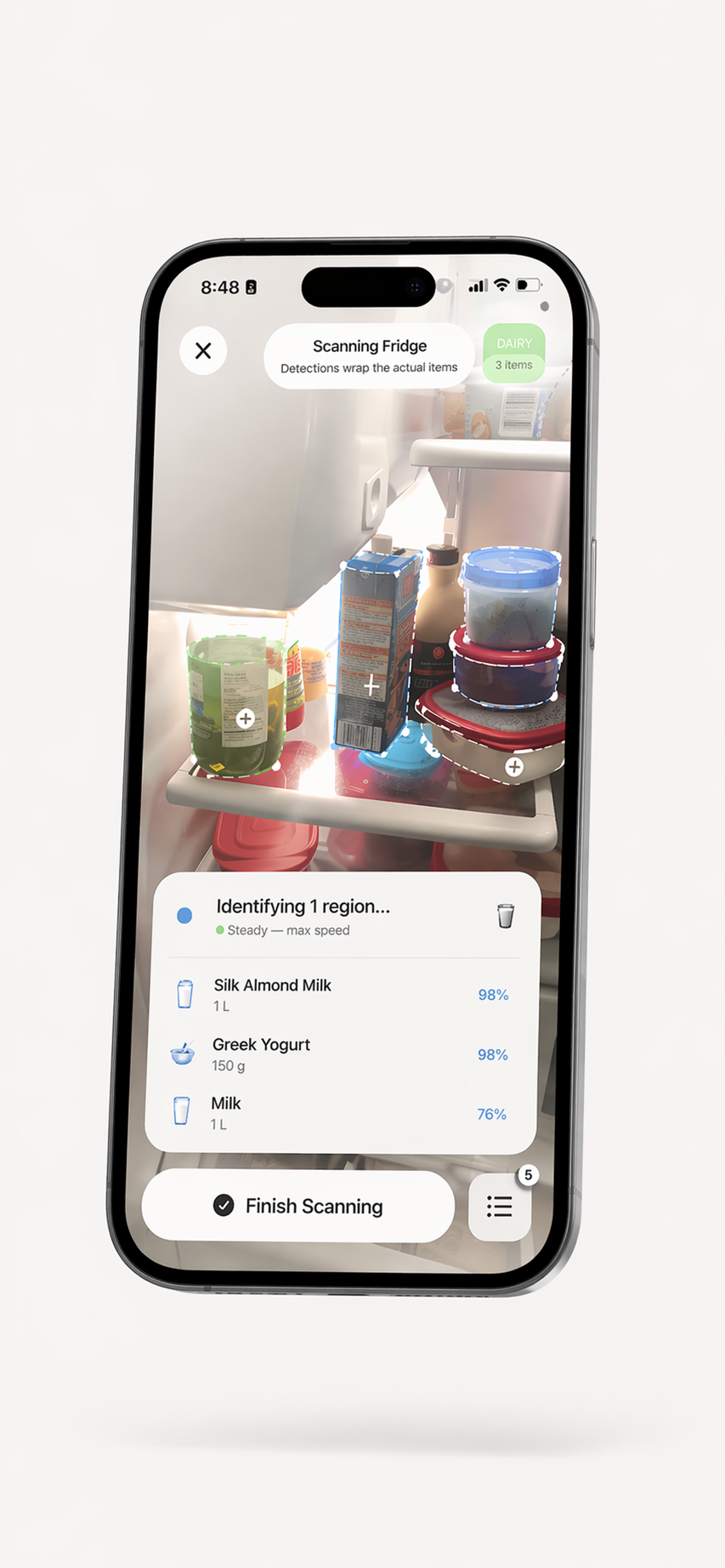
Families in neighborhoods and suburbs — ScanMyPantry fits the rhythm of Chicago, IL life. Scan in seconds, get expiry alerts, cook from what you already have. Free to start, no account needed.
🏙️ Young professionals
Loop professionals — ScanMyPantry fits the rhythm of Chicago, IL life. Scan in seconds, get expiry alerts, cook from what you already have. Free to start, no account needed.
🎓 Students
University students across 30+ campuses — ScanMyPantry fits the rhythm of Chicago, IL life. Scan in seconds, get expiry alerts, cook from what you already have. Free to start, no account needed.
Cook it before it goes: Chicago, IL edition
The dishes Chicago, IL actually cooks — deep-dish pizza, Chicago-style hot dog, Italian beef sandwich — each leave a trail of partial ingredients. That trail is where the waste hides.
🍽️ Deep-dish pizza
The ingredients that don't make it into the final dish — half an onion, the rest of the cream — are where waste happens. The recipe engine turns leftovers like these into the next meal.
🍽️ Chicago-style hot dog
The ingredients that don't make it into the final dish — half an onion, the rest of the cream — are where waste happens. The recipe engine turns leftovers like these into the next meal.
🍽️ Italian beef sandwich
The ingredients that don't make it into the final dish — half an onion, the rest of the cream — are where waste happens. The recipe engine turns leftovers like these into the next meal.
Your first week with ScanMyPantry in Chicago, IL
Getting value from the app takes one week of small steps — free, no account needed to start.
📸 Day 1 — Baseline scan
Scan everything you have now. This is your starting line — the monthly report measures progress from here.
🗑️ Day 2 — Toss honestly, log it
Throw out what's gone and mark it in the app. Seeing the week's losses once is the motivation the habits need.
🔔 Day 3 — Turn on alerts
7, 3, and 1 day expiry notifications. Most saved food is saved by simply being reminded in time.
📉 End of week — First digest
The weekly recap shows what got used, what got saved, and what to buy less of. Small numbers moving the right way — that's the whole game.
Frequently asked questions about ScanMyPantry in Chicago, IL
How does ScanMyPantry compare to just using a notepad or spreadsheet?
The AI scanning is the game-changer — you don't manually log anything. The app identifies food automatically, tracks expiry dates, and sends push notifications. Manual systems fail because people stop updating them. AI scanning makes it effortless to maintain.
Do I need to weigh or measure my food?
No — the app tracks items, not grams. The monthly report is built from what you used versus what expired, so the feedback loop works without a kitchen scale or any manual logging rituals.
What's the single biggest habit change to start with?
The pre-shop inventory check. Looking at what you already have before buying more stops duplicate purchases — usually the fastest, biggest win, because duplicated food is the food most likely to expire unused.
Is a food waste app worth it for a one-person household?
Yes — smaller households waste food too, and the same research estimate (40-60% preventable) applies. The core app is free, so there's no subscription to offset before you're saving money.
Also for Chicago, IL kitchens
ScanMyPantry in other cities
Built for over 350,000 students at Northwestern, UChicago, DePaul, and more — and everyone else in Chicago, IL
Stop re-buying what you already own, and use what you buy before it spoils. Free download.

Works on iPhone XS+. No account, no commitment — just smarter food tracking.